Creamed Spinach, Lawry’s Style
Fresh spinach folded into a bacon-and-garlic béchamel — the tableside classic that’s shared a cart with prime rib since Lawry’s opened its doors.
⚠ Reconstruction — not Lawry’s proprietary recipe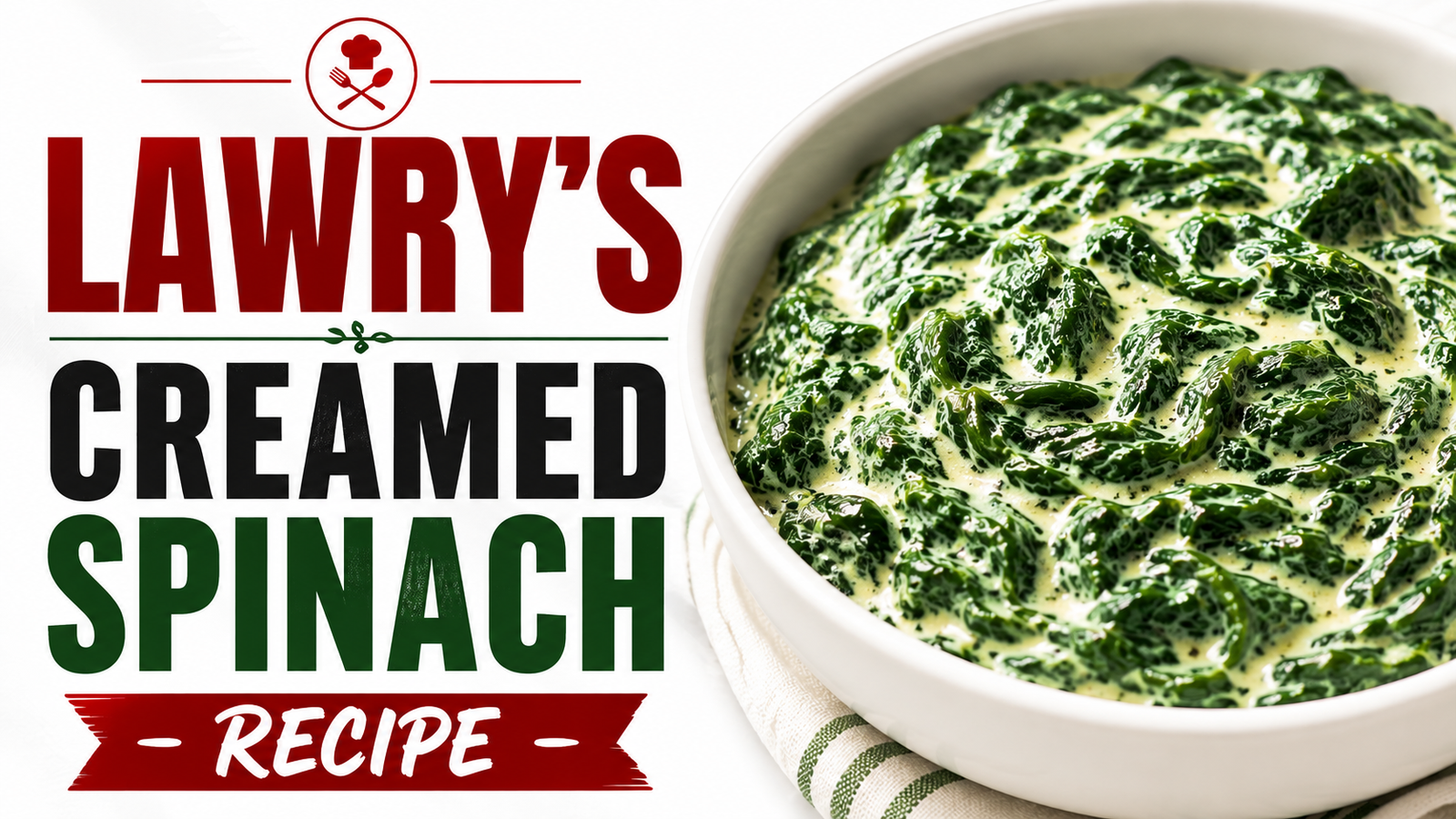
Creamed Spinach, Lawry’s Style
Creamed spinach worth setting a table for
When Lawry’s The Prime Rib opened in Beverly Hills in 1938, creamed spinach wasn’t yet the reflexive steakhouse side it is today — it debuted on the menu that year alongside baked potatoes and Yorkshire pudding, and most guests had never eaten anything quite like it. Nearly ninety years later, the restaurant says its creamed spinach is still cooked according to that original 1938 recipe — but the exact method has never been published. Every “Lawry’s copycat” floating around online, including this one, is a reconstruction built from restaurant-adapted versions that have surfaced over the decades, not the real thing.
This version leans on two of the more credible trails: a recipe Lawry’s itself shared with a Seattle Times reader in 2010, built around bacon, scallion, onion, and a hint of garlic, and an older version passed down through a 1959 cookbook called Ford Treasury of Favorite Recipes from Famous Eating Places. Both land on the same basic structure: bacon and aromatics folded into a milk-based béchamel with squeezed-dry spinach.
Watch: the history behind the dish
Equipment
- Large skillet
- Medium saucepan
- Whisk
- Large pot (for blanching, if using fresh spinach)
- Colander
- Clean kitchen towel or cheesecloth, for squeezing spinach dry
- Chef’s knife and cutting board
Ingredients
- 2 lbFresh spinach, washed and stemmed — or 2 (10 oz) packages frozen chopped spinach, thawed
- 4 slicesBacon, finely chopped
- ¼ cupYellow onion, minced
- 2Green onions, thinly sliced (optional)
- 3 clovesGarlic, minced
- 3 tbspUnsalted butter
- 3 tbspAll-purpose flour
- 2 cupsWhole milk, warmed
- ½ cupHeavy cream
- 1 tspLawry’s Seasoned Salt, plus more to taste
- ¼ tspBlack pepper
- 1 pinchGround nutmeg (optional)
Method
Blanch the spinach
Bring a large pot of salted water to a boil. Blanch fresh spinach in batches for about 45 seconds, then plunge into an ice bath. Drain and squeeze out as much liquid as you can with your hands or a kitchen towel, then chop finely. If using frozen spinach, thaw fully and squeeze it just as dry.
Cook the bacon
In a large skillet over medium-high heat, cook the chopped bacon, stirring occasionally, until browned and crisp, 5 to 7 minutes.
Soften the aromatics
Leave the bacon fat in the pan. Add the onion and green onion and cook until softened and translucent, 3 to 4 minutes. Stir in the garlic and cook until fragrant, about 1 minute more. Remove from heat.
Start the roux
In a medium saucepan, melt the butter over medium heat. Whisk in the flour and cook, stirring constantly, until lightly toasted and pale gold, about 2 minutes.
Build the sauce
Slowly whisk in the warmed milk, a little at a time, until smooth. Bring to a gentle boil, then reduce heat and simmer, stirring often, until thick enough to coat the back of a spoon, 3 to 5 minutes.
Enrich and season
Stir in the heavy cream, Lawry’s Seasoned Salt, pepper, and nutmeg if using. Taste and adjust.
Fold it together
Add the chopped spinach and the bacon-onion-garlic mixture to the sauce. Stir gently to combine and heat through, about 2 minutes.
Serve
Serve immediately, straight from the pan — the way it arrives tableside next to a cart of prime rib.
Notes on the sources
Substitutions
- Frozen chopped spinach instead of fresh, for convenience
- Half-and-half instead of heavy cream, for a lighter sauce
- Turkey bacon, or omit bacon entirely, for a vegetarian version (flavor will differ noticeably)
- Plant milk plus a vegan butter/flour roux for dairy-free — expect a thinner, less rich result
- A general seasoned salt plus a pinch of paprika and turmeric, if you don’t have Lawry’s brand on hand
Storage & reheating
- Refrigerate in an airtight container up to 3–4 days
- Reheat gently on the stovetop over low heat
- Stir in a splash of milk or cream to loosen the sauce as it reheats
- Freezing works for up to about 2 months, but the sauce may separate slightly on thawing — whisk while reheating
Serving suggestions
The obvious pairing is prime rib, but this holds its own next to roast beef, grilled steak, roast turkey, or leg of lamb. For a full steakhouse spread, add a baked potato and a popover-style Yorkshire pudding — the two other sides that opened alongside it on Lawry’s original 1938 menu.
Nutrition (estimated)
| Calories | 185 kcal |
|---|---|
| Total fat | 14 g |
| Saturated fat | 7 g |
| Carbohydrates | 9 g |
| Fiber | 3 g |
| Sugar | 3 g |
| Protein | 6 g |
| Sodium | 430 mg |
| Cholesterol | 35 mg |
Frequently asked questions
Is this Lawry’s actual recipe?
No. Lawry’s has never published its exact recipe, and its own site says the dish is still made to its original 1938 formula in-house. This page reconstructs it from independently published, restaurant-adapted versions — not the proprietary method.
Should I use fresh or frozen spinach?
Either works. Fresh spinach needs a quick blanch, ice bath, and hard squeeze before chopping. Frozen chopped spinach just needs to be fully thawed and squeezed as dry as possible — the step most home versions skip, which is why the sauce sometimes turns watery.
Can I make this ahead of time?
Yes. Make it up to 2 days ahead, cool, and refrigerate airtight. Reheat gently over low heat, stirring in a splash of milk or cream to loosen the sauce.
Can I freeze creamed spinach?
You can, for up to about 2 months, but cream sauces tend to separate a little on thawing. Reheat slowly over low heat, whisking, and expect a slightly looser texture than fresh.
What’s in Lawry’s Seasoned Salt, and can I substitute it?
It’s built around salt, sugar, and paprika, rounded out with onion powder, turmeric, and other spices. Any seasoned salt gets you close; add a pinch of paprika and a small pinch of turmeric if yours tastes flat by comparison.
Why did my sauce turn out thin or watery?
Almost always under-squeezed spinach. Both fresh and thawed frozen spinach hold a surprising amount of water, and any that isn’t wrung out thins the béchamel once the dish sits for a minute.
Rate this recipe
No votes yet this session
Ratings are stored in this browser tab only, for this visit. They reset on reload and aren’t sent anywhere — nothing is saved until a real backend is wired up.
Whatever your table, the point of creamed spinach is the same one it’s had since 1938: something rich and a little indulgent to sit next to the meat, not compete with it.